Making reconciliation faster with reusable mapping templates

(
01
The problem
Mapping template with manage the team
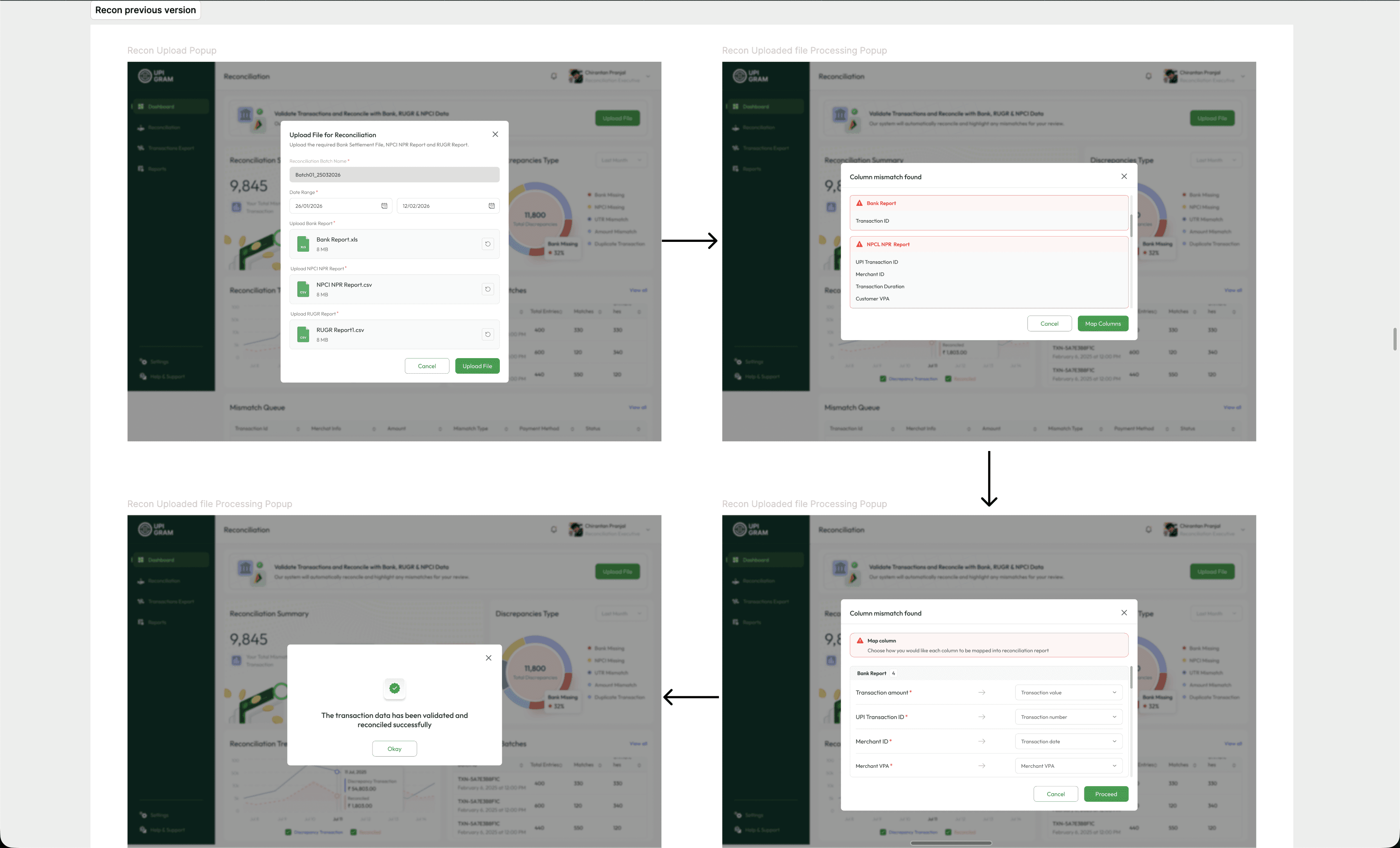
After the team lead quit the team the company set me as a interm TL until the next TL take charge but that transition is taking too much time than expected, while in the mean time this is the first project assigned to me a team lead, apart from the product designer i have a new task of managing the team of 4 designer (include 1 senior, 2 mid, 1 junior designer) in the task my work was assgining the task with the team and direct them to drive the project of Recon executives had to manually map columns every time they uploaded a file, even for recurring bank formats. The existing workflow did not retain these mappings, meaning users repeatedly solved the same problem from scratch. This created repetitive work, increased cognitive load, and introduced avoidable human-error risk.
(
02
Discovery
Aligning before designing
After several conversations with the PM we put ideas, flow and key notes and built a shared overview — making sure we were aligned before touching a single pixel. This is usually my favourite part: agreeing on the key points and shaping the approach together.


(
03
Research
Three people, three needs
On projects like this, having a solid Figma structure is key. We had to collaborate with multiple developers, the product team, and stakeholders. To keep everything organized, we split the files by project and connected them through one unified design system.
(
04
Product
The final design
Three mobile apps, an e-commerce website, a kiosk POS and an operations dashboard — every surface drawn from the same system.
(
05
Project results
A whole ecosystem, shipped
We’ve successfully designed the whole ecosystem for an online laundry platform, including three parts. The mobile apps, the website, and the dashboard for managing all services.
10%
Personalized landing pages created
18%
Personalized landing pages created
Credits
- user name, team